"Camping near Austin" can mean almost anything — pitching a backpacking tent at Pedernales Falls, parking an RV at an LCRA lake park, finding a quiet spot in Sam Houston National Forest hours away, or booking a riverside cabin where the tubes and shuttle are already waiting. This guide walks through every option honestly so you can pick the one that actually fits your group.
The Spectrum of Camping
Before comparing locations, it helps to clearly define the main styles of camping. Most overlap, but each one trades comfort, cost, and complexity differently.
Primitive Camping
Primitive camping means a designated site with few or no developed amenities — usually no electricity, no water hookup at the site, and a pit or vault toilet at best. You haul in your own shelter, water, food, and gear, and you pack out everything you bring. Many Texas State Parks (Pedernales Falls, Colorado Bend, Inks Lake) offer primitive or walk-in sites alongside their developed campgrounds.
Dispersed Camping
Dispersed camping is camping outside of a designated campground, usually on federal public land. There are no facilities, no marked sites, no reservations — you find a legal spot, follow stay limits, leave no trace, and move on. It's far more common in western states than in Texas.
Developed Campgrounds
Developed campgrounds offer marked sites with picnic tables, fire rings, restrooms, often showers, and frequently water and electric hookups. Texas State Parks, LCRA lake parks, county parks, and many private campgrounds fall here. Most require reservations, especially on weekends and holidays.
RV Camping
RV camping covers everything from a basic site with a 30/50 amp hookup to a full-service RV resort with pools and laundry. Around Austin you'll find RV sites at state parks, LCRA parks, and dedicated RV resorts. Confirm rig length limits, hookup type, and reservation rules at the specific park.
Glamping & River Resorts
Glamping (glamorous camping) keeps the outdoor setting — firepits, stars, river sounds — but swaps the work for real beds, climate control, and lodging that's already set up when you arrive. Riverfront glamping properties pair that lodging with on-site activities like tubing, kayaking, and shuttle service. For groups, families, and first-time campers, glamping is often the lowest-friction way to spend a weekend outdoors. See our Glamping Near Austin guide for a deeper look at the format.
Camping Styles Near Austin, Compared
| Style | What You Get | Best For | Watch-Outs |
|---|---|---|---|
| Primitive | Designated site, minimal amenities, pack-in/out. | Backpackers, budget campers, solitude seekers. | Heat, water, and zero comfort margin. |
| Dispersed | No site, no facilities, federal public land only. | Experienced campers wanting true backcountry feel. | Very limited near Austin; confirm legality. |
| Developed Campground | Marked sites, restrooms, often showers and hookups. | First-time campers, families, weekenders. | Books out months ahead at popular state parks. |
| RV Camping | Pull-through sites with power, water, sometimes sewer. | RVers and travel trailers. | Rig length limits and seasonal pricing vary. |
| Glamping | Pre-pitched cabins or tents with real beds. | Mixed-comfort groups, first-time campers, couples. | Higher nightly rate than primitive. |
| Private River Resort | Lodging, river access, tubing, kayaks, shuttle in one booking. | Families and groups who want river access, tubing, kayaking, shuttle service, and comfortable lodging without managing every primitive-camping detail. | Limited number of properties; book early in summer. |
Texas Camping Regulations
Permits, Reservations, and Lead Times
Most Texas State Parks require advance reservations through the Texas State Parks reservation system. Federal lands use Recreation.gov. LCRA lake parks have their own booking pages via LCRA. Popular weekends fill fast — check the official page for each park's current window.
Fire Safety & Burn Bans
County burn bans are common across Central Texas, especially in dry summers. A county-wide ban typically restricts open flames on both public and private land in that county. Always check the Texas A&M Forest Service burn ban map before your trip and follow any posted restrictions at the trailhead or campground.
Alcohol, Quiet Hours, and Pet Policies
Alcohol rules, quiet hours, and pet policies vary by park. Most Texas State Parks have quiet hours from roughly 10pm to 6am and allow leashed pets in campgrounds but not in swim areas or backcountry. Confirm specifics on each park's official page before booking.
Private Property and Trespass Awareness
In Texas, an unmarked field, a river bend you can see from the road, or a quiet stretch of dirt road is almost certainly someone's private property. Camping there without explicit permission is trespassing. Stick to designated public campgrounds, federal dispersed areas with posted rules, or private campgrounds and resorts that have invited you in.
Top Camping Destinations Near Austin
Texas State Parks
Within roughly two hours of Austin you'll find Pedernales Falls, McKinney Falls, Inks Lake, Bastrop, and Colorado Bend. Each mixes developed and primitive sites and uses the Texas State Parks reservation system.
County & LCRA Parks
LCRA parks like Pace Bend and Muleshoe Bend on the Highland Lakes, plus county parks like Lake Georgetown, offer lake-focused camping closer to town. Check the LCRA parks page for current rates and availability.
Federal Lands
The nearest federal lands with dispersed camping — Sam Houston National Forest and LBJ National Grasslands — are several hours from Austin. Worth it for a true backcountry trip; not a weekend option.
Private River Resorts & Glamping
Private river resorts on the San Marcos, Guadalupe, and Frio rivers bundle lodging with on-site water activities. For families and groups focused on river time, the bundle often beats piecing together a campsite + tube rental + shuttle reservation + restaurant trip yourself.
Why Son's River Ranch Works for Campers Who Want the River Without the Hassle
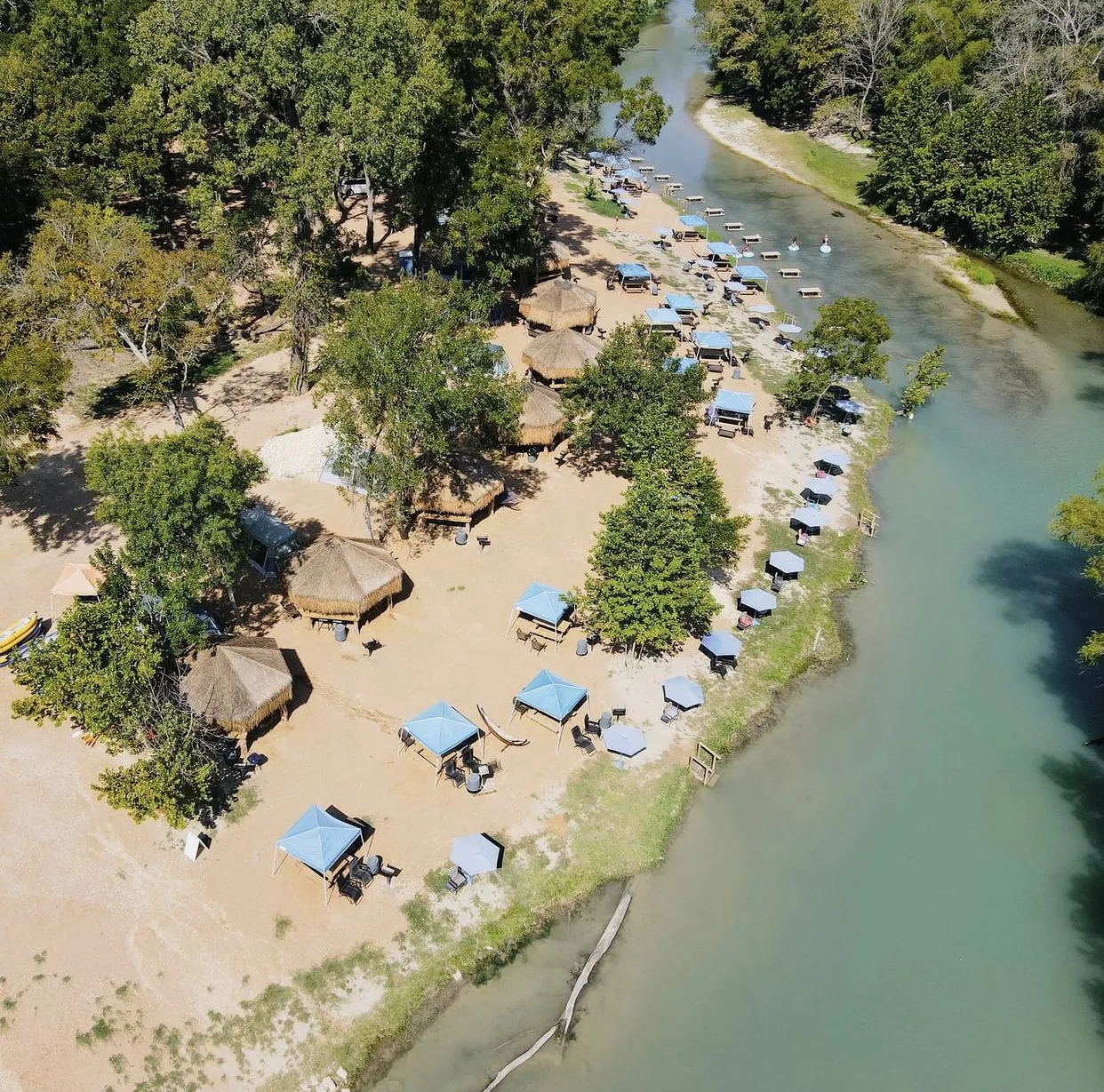
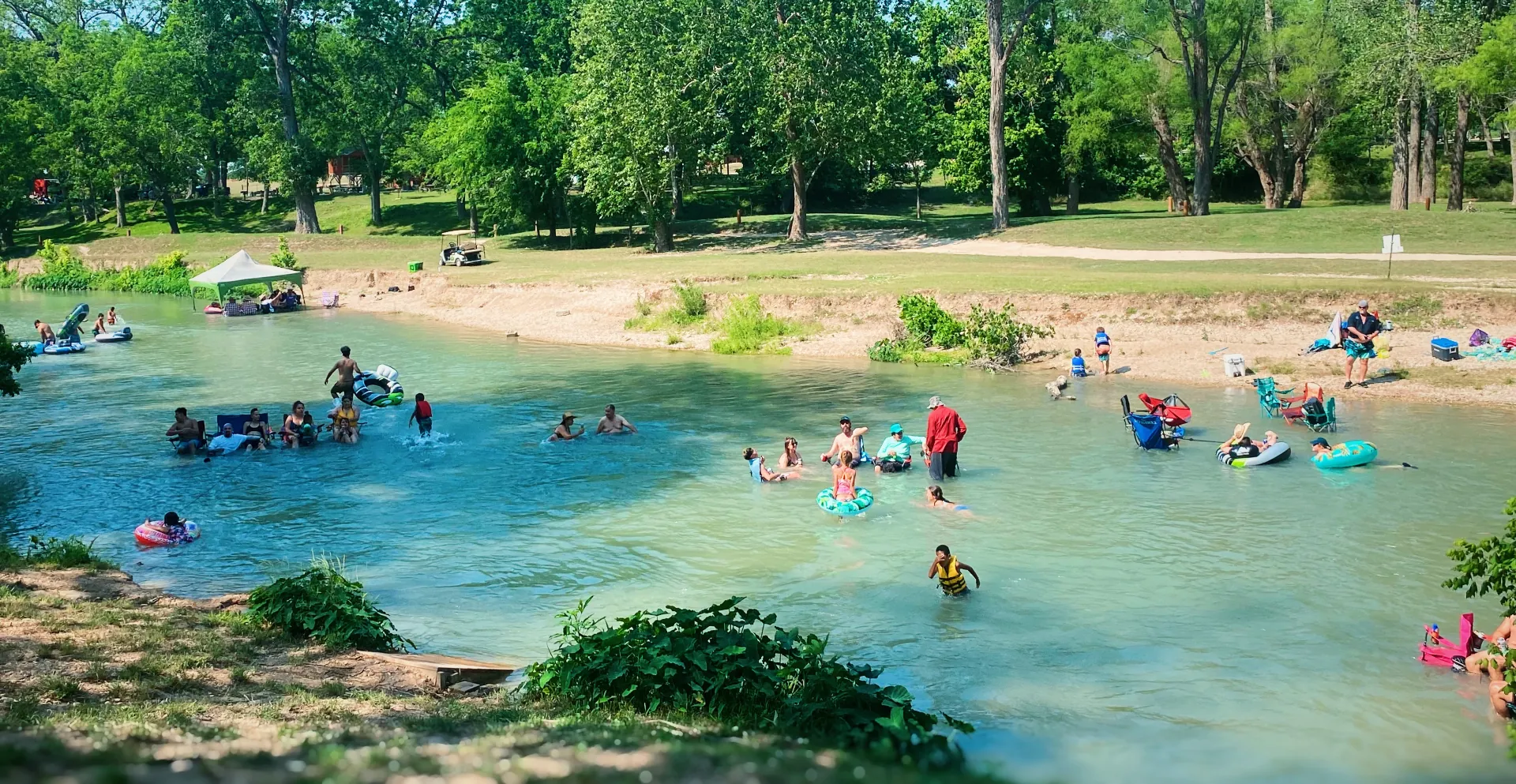
- Private stretch of the spring-fed San Marcos River
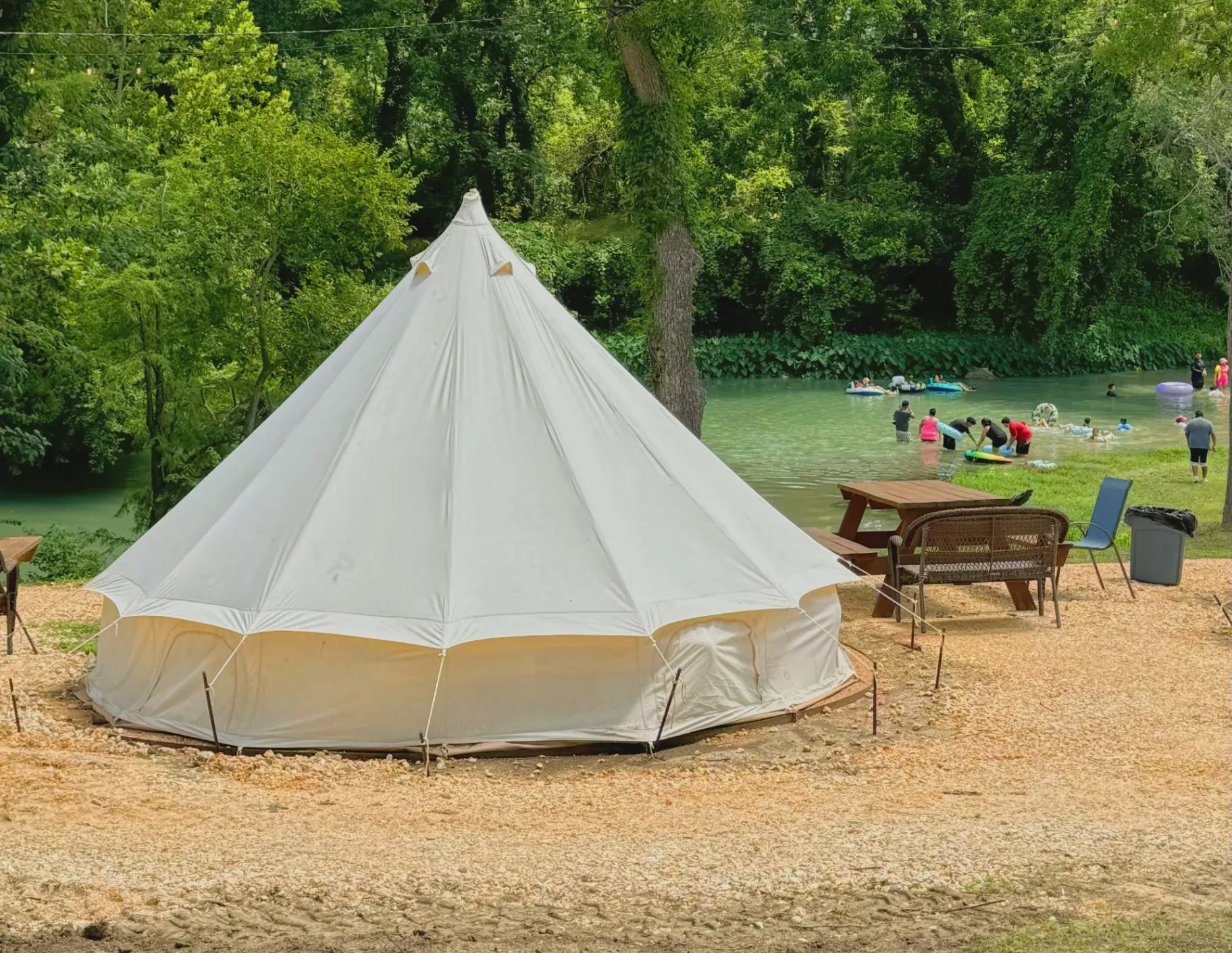
- Riverfront glamping cabins, safari cabins, and bell tents
- Tubing and kayaking on a calm stretch with small rapids and no dams
- On-site shuttle service so groups stay together
- Day passes for non-overnight river days
- Comfortable lodging — A/C, real beds, private firepits
- About 45 minutes from San Antonio, roughly an hour from Austin, and close to New Braunfels and San Marcos
Where to Camp Near Austin by Trip Type
| Trip Type | Best Options | Good Fit For | Planning Notes |
|---|---|---|---|
| First-time family camping | Developed state-park sites, glamping cabins. | Parents new to camping with kids. | Book early; pack heat-weather gear. |
| Primitive / backpacking | Pedernales Falls primitive, Colorado Bend. | Experienced campers wanting solitude. | Confirm water sources and stay limits. |
| Legal dispersed | Sam Houston National Forest, LBJ National Grasslands. | Backcountry-ready campers. | Several hours from Austin; check USFS rules. |
| RV camping | LCRA parks, state-park RV loops, private RV resorts. | RVers and travel trailers. | Confirm rig length and hookup type. |
| Lake camping | Inks Lake, Pace Bend, Muleshoe Bend, Lake Georgetown. | Boaters, swimmers, sunset chasers. | Watch lake levels and burn bans. |
| Riverfront glamping | Son's River Ranch, Hill Country river resorts. | Mixed-comfort groups, couples, first-timers. | Book weekends well in advance. |
| Tubing-focused weekend | Son's River Ranch with on-site shuttle. | Groups who want best tubing near Austin without logistics. | Summer weekends sell out fastest. |
| Celebration / group trip | Private river resort with multiple cabins. | Bachelorettes, reunions, birthdays. | Reserve adjacent units early. |
Primitive / Dispersed Camping Gear Checklist
- Tent, footprint, stakes, and guy lines
- Sleeping bag rated for the season and a sleeping pad
- One gallon of drinking water per person per day (more in summer)
- Stove, fuel, lighter, and cookware
- Food in sealed containers; bear-aware storage if applicable
- First-aid kit, including blister care and electrolytes
- Headlamp with spare batteries
- Sun protection, wide-brim hat, and insect repellent
- Map, compass, and a downloaded offline GPS map
- Trash bags to pack out everything
- Trowel and toilet paper where no facilities exist
- Weather-appropriate layers — Texas swings hot to cool overnight
Leave No Trace in the Hill Country
Follow the seven Leave No Trace principles: plan ahead, travel and camp on durable surfaces, dispose of waste properly, leave what you find, minimize campfire impact, respect wildlife, and be considerate of other visitors. Central Texas ecosystems recover slowly from trampling and fire scars.
Heat, Water, Wildlife, and Seasonality
Central Texas summers are intense. Plan strenuous activity for early morning and evening, drink more water than you think you need, and know the signs of heat exhaustion. Watch river flow on USGS water data — Hill Country streams can rise quickly after rain. Snakes and scorpions exist; shake out shoes and bedding.
Primitive or Premier? Making the Right Choice
When Primitive / Dispersed Camping is Right
Choose primitive or dispersed if cost matters most, you already own the gear, you want solitude, and you're comfortable handling weather, water, and safety on your own. These trips reward self-sufficiency and reset your sense of scale in a way a resort never will.
When a Private River Resort or Glamping Shines
Choose a river resort or glamping property when your group has mixed comfort levels, when river time is the point, when you don't want to manage tubing logistics and meals, or when you're celebrating something and want lodging that's already set up. Son's River Ranch is built for that audience — and you can still light a fire at your cabin's firepit when burn bans allow.
Primitive Camping vs. Son's River Ranch
| Factor | Primitive Camping | Son's River Ranch |
|---|---|---|
| Water access | Varies; often a hike to a creek or lake. | Private stretch of spring-fed San Marcos River. |
| Sleeping setup | Your tent, pad, and bag. | Real beds in cabins, safari cabins, or bell tents. |
| Bathrooms | Pit toilet or none. | Modern restrooms and showers. |
| AC / climate control | None. | A/C in cabins; shaded sites and river cool-off. |
| Gear required | Full kit, food, water, fuel. | Clothes, swimsuit, food for the firepit. |
| Cooking / food prep | Camp stove, all groceries packed in. | BBQ pit at your unit; grocery towns minutes away. |
| River logistics | Drive to a put-in, arrange shuttle, return. | On-site tubing, kayaks, and shuttle. |
| Booking complexity | Reservations + permits + gear plan. | One booking covers lodging and most activities. |
| Best group type | Solo, couples, experienced campers. | Families, mixed-comfort groups, celebrations. |
| Best season | Spring and fall to avoid Texas heat. | Year-round; river runs cool year-round. |
Primitive camping is cheaper and more rugged; Son's River Ranch is easier, more comfortable, and better for groups who want water activities and lodging handled. Both are valid — the right pick depends on your group.